As an Amazon Associate we earn from qualifying purchases. Here’s how it works.
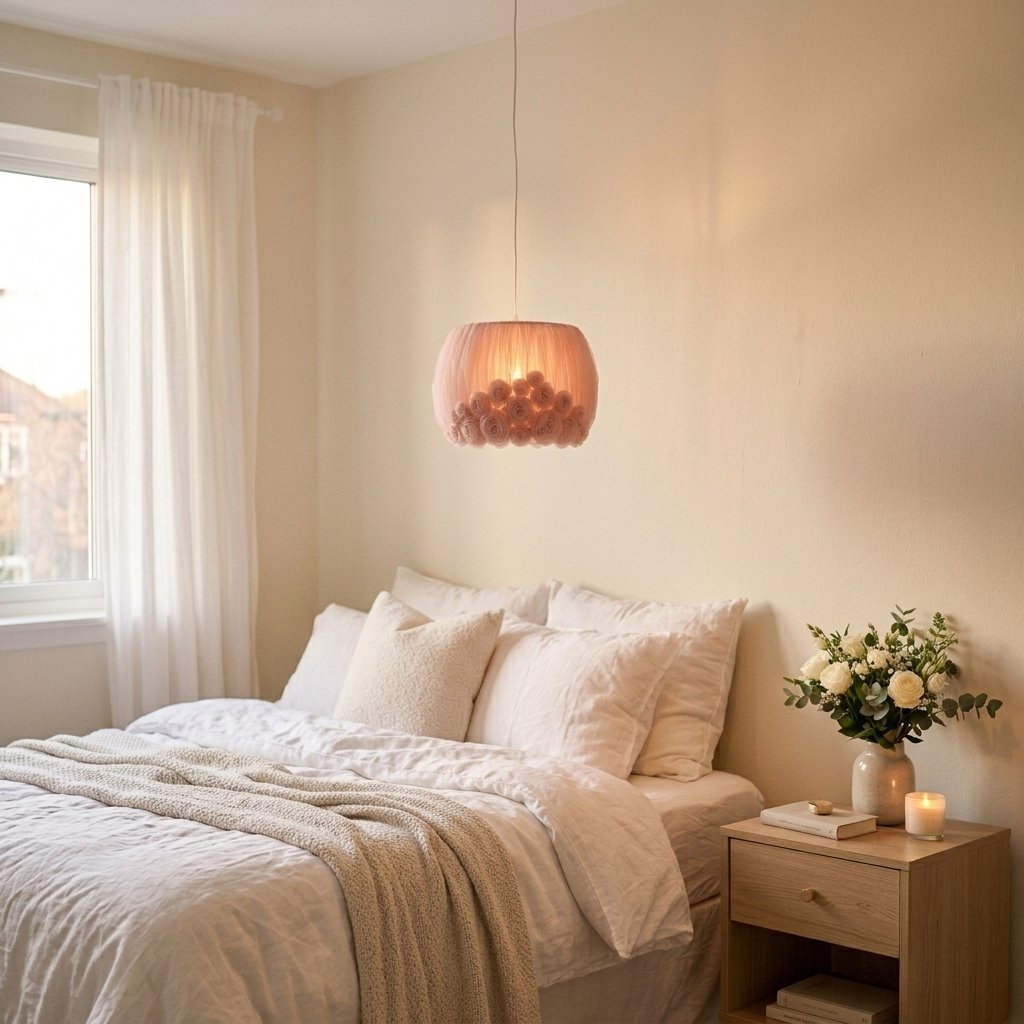
If you’ve been hunting for a soft, romantic lighting idea that doesn’t involve a sewing machine, this DIY tulle lampshade is it. It’s built from nothing more than blush-pink tulle wrapped around a simple frame, finished with a ring of handmade tulle flowers at the base.
Quick answer: you wrap layers of tulle around a lampshade frame, glue on tulle flower rosettes around the bottom edge, and fit it with a cool-touch LED bulb — no needle or thread required, and most people finish it in a single afternoon.
The moment you switch it on, light filters through every layer and turns the whole thing soft and glowing, almost fairytale-like — the kind of detail that makes a bedroom, reading nook, or vanity corner feel finished. It has that imperfect, hand-gathered texture you just can’t get from a store-bought shade, and that’s exactly what makes it feel special.
Why You’ll Love This Tulle Pendant Light
- No sewing required — everything is wrapped, tied, or glued, so it’s beginner-friendly.
- Budget-friendly — tulle is inexpensive, and one roll makes a full-size shade.
- Customizable — change the tulle color, flower size, or shade shape to match your space.
- Romantic, boho, or girly — the soft, textured look fits a ballerina-inspired bedroom, a boho reading nook, or a whimsical nursery just as easily.
- A genuine conversation piece — the handmade texture reads as intentional, not unfinished.
What You’ll Need?
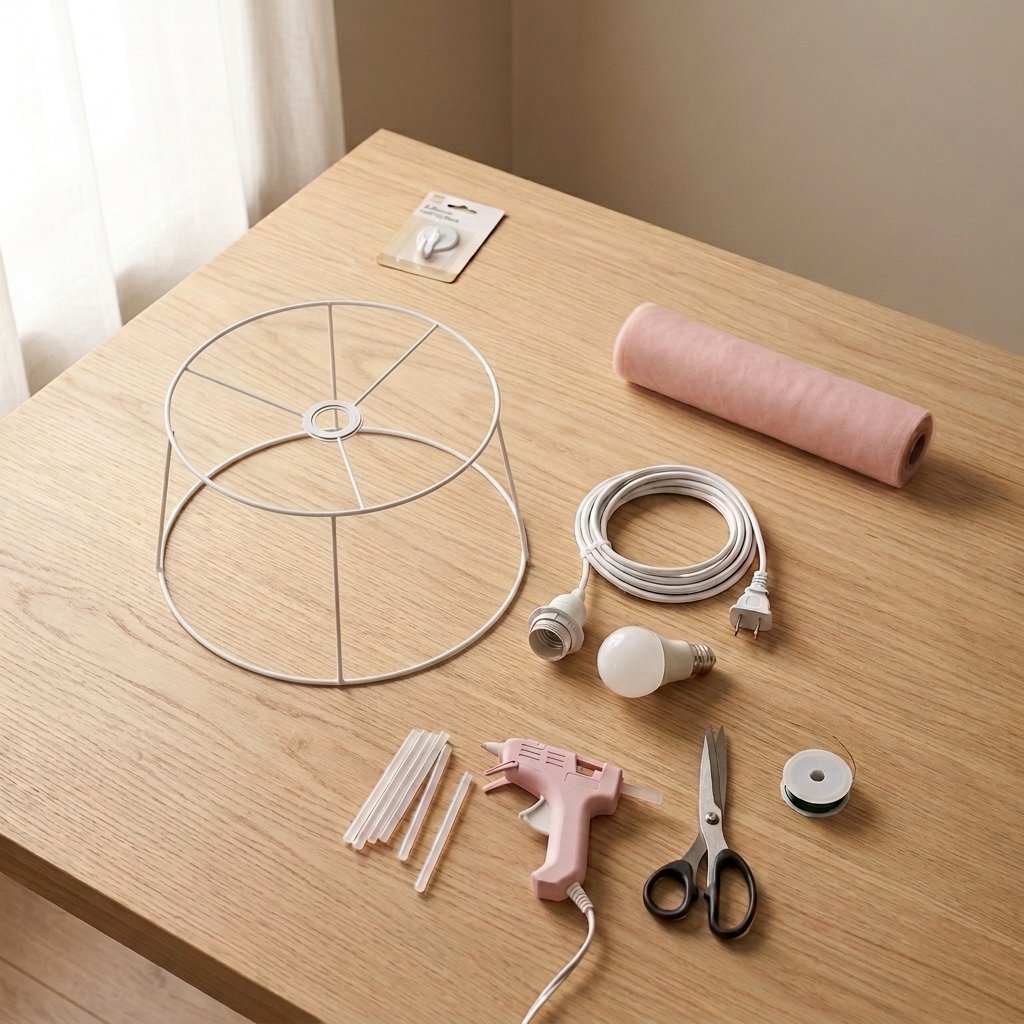
Gather these before you start — most of it comes together in one small haul:
- Blush Pink Tulle Fabric Roll — a 6-inch x 25-yard roll is enough for one medium shade; grab two rolls for an extra-fluffy finish
- Round Wire Lampshade Frame — a 10–12 inch frame gives the fullest, most voluminous silhouette
- Plug-In Pendant Light Cord Kit — skip this if your frame already has wiring built in
- Cool-Touch LED Light Bulb — important for fabric safety, more on this below
- Mini Hot Glue Gun with Glue Sticks
- Fabric Scissors
- Optional: Thin Floral Wire for shaping tighter flower centers
- Optional: Adhesive Ceiling Hook if you’re hanging without an existing fixture


A quick safety note: tulle is a lightweight synthetic mesh, so it sits close to the bulb once wrapped. Always use an LED bulb — LEDs run cool to the touch, unlike incandescent bulbs, which can get hot enough to be a fire risk near fabric. This one swap is what makes the whole project safe for everyday use.


How to Make a No-Sew Tulle Pendant Lampshade
Step 1: Prep Your Frame
Start with your round wire lampshade frame. If it’s shiny bare metal, wrap it first with a strip of tulle or ribbon so no wire peeks through the finished shade — this becomes the anchor point for every wrap that follows.
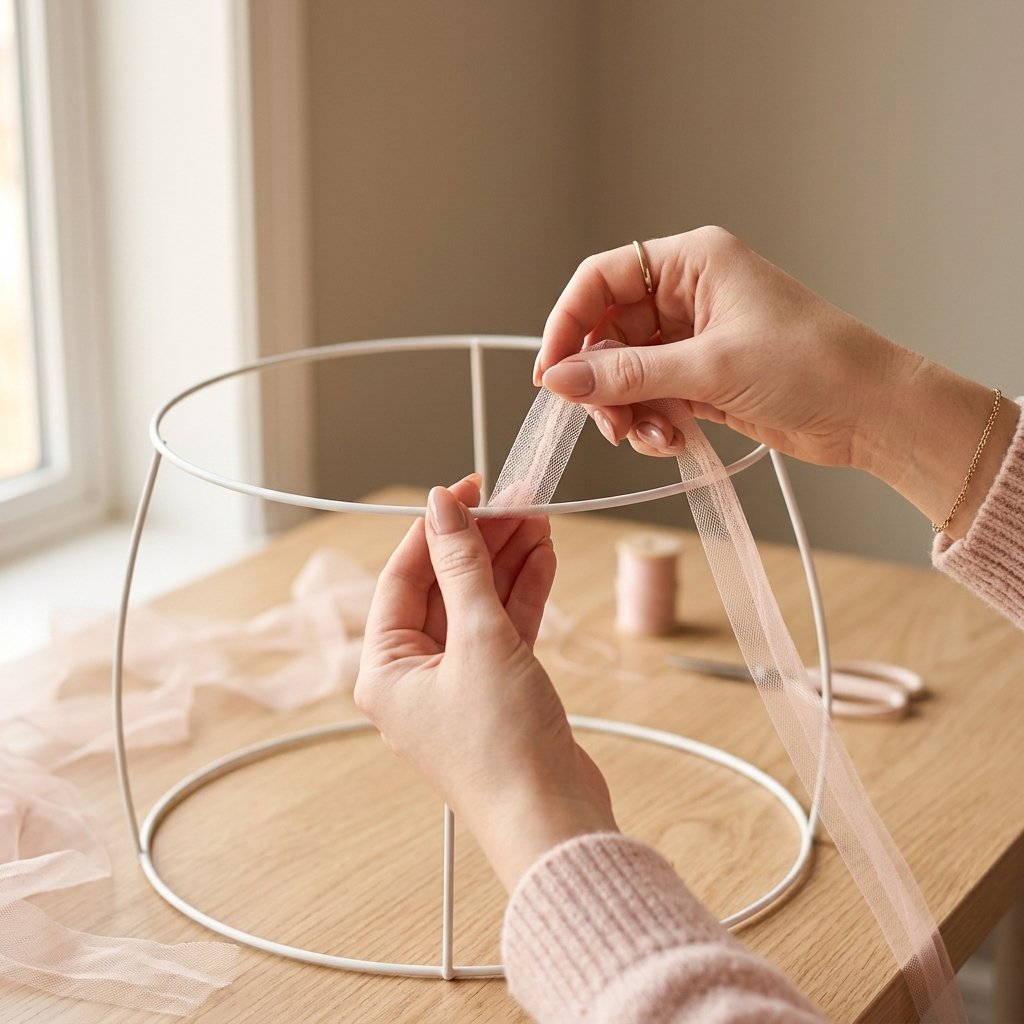
Step 2: Cut Your Tulle Into Strips
Cut your tulle into strips roughly 6–8 inches wide and 12–14 inches long. You don’t need to measure precisely — slightly uneven strips actually add to the soft, handmade texture that makes this lampshade so charming.
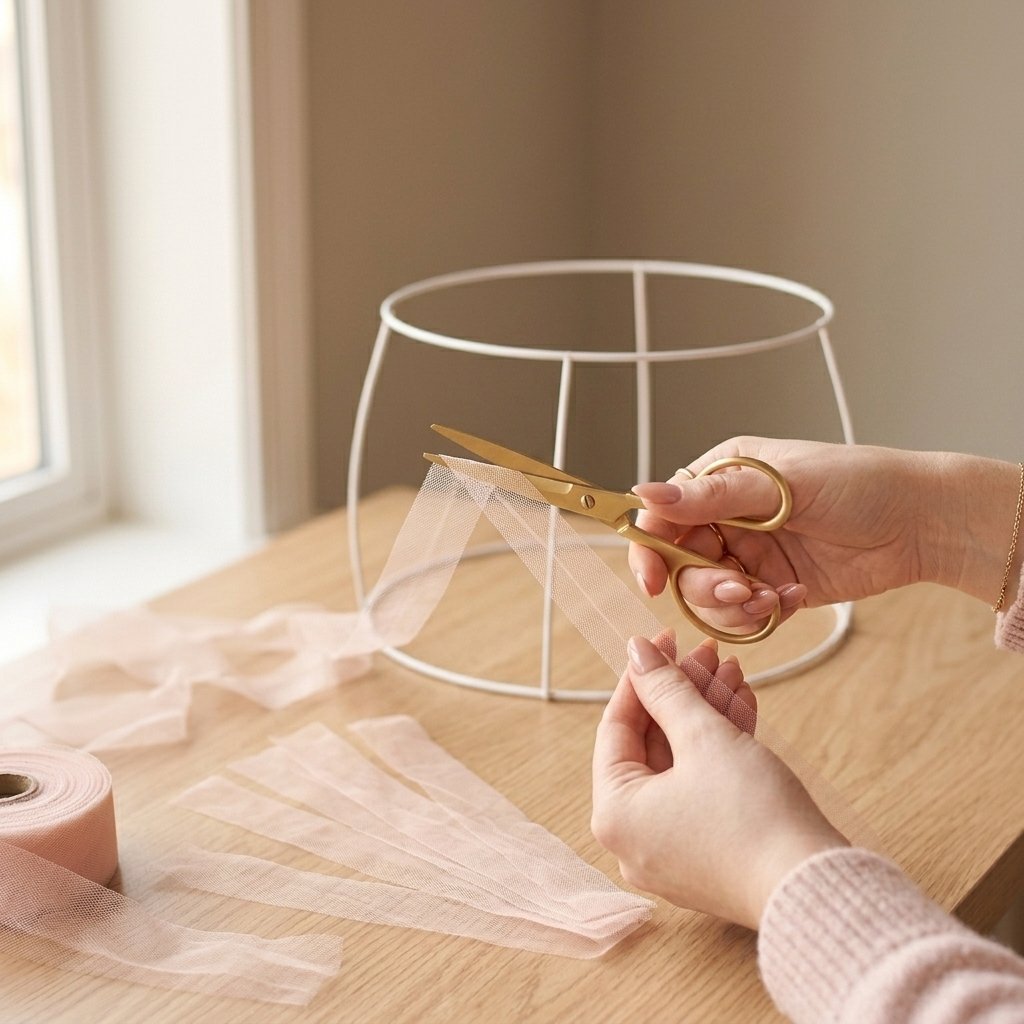
Step 3: Wrap the Frame to Build the Shade
Tie or loop each tulle strip around the frame, working in one direction around the ring and overlapping slightly as you go. Secure the tail ends on the inside of the frame with a small dab of hot glue so nothing shows from the outside.
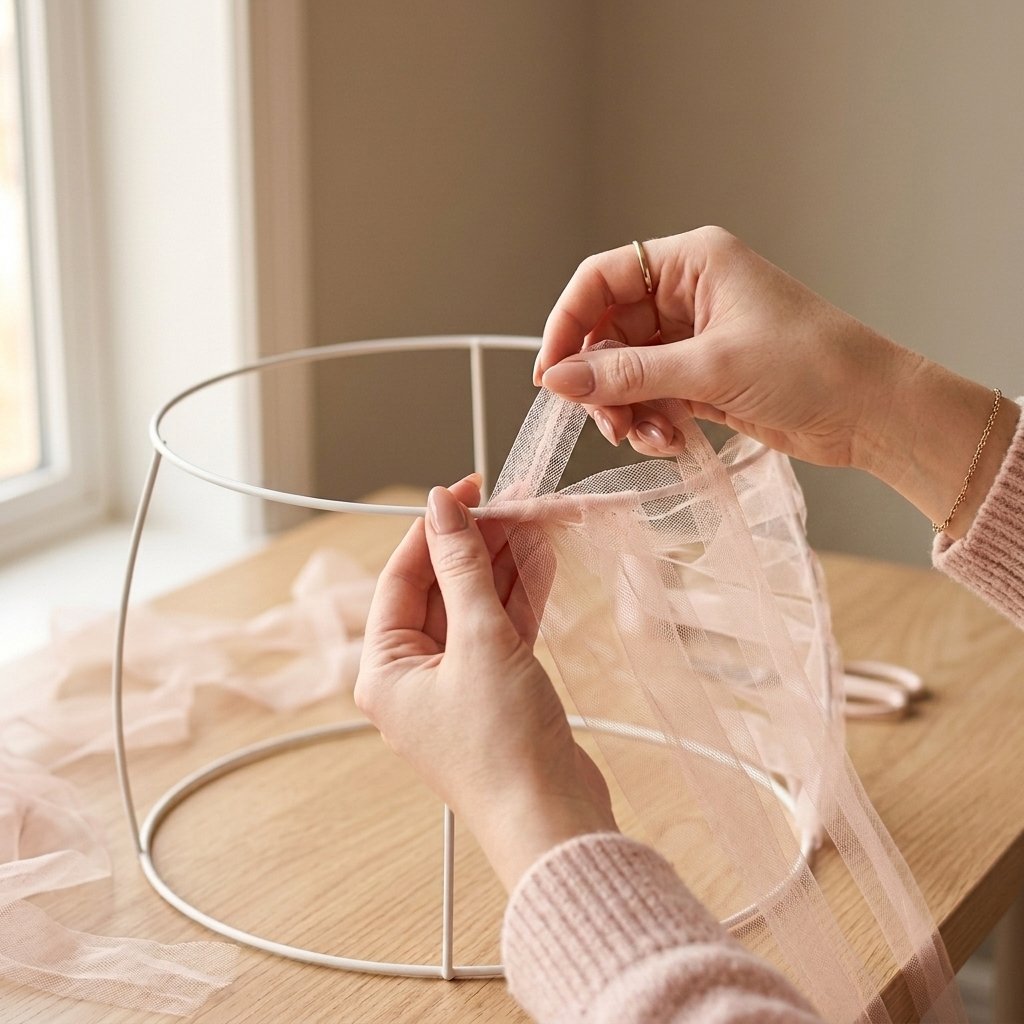
Step 4: Layer for Fullness and Texture
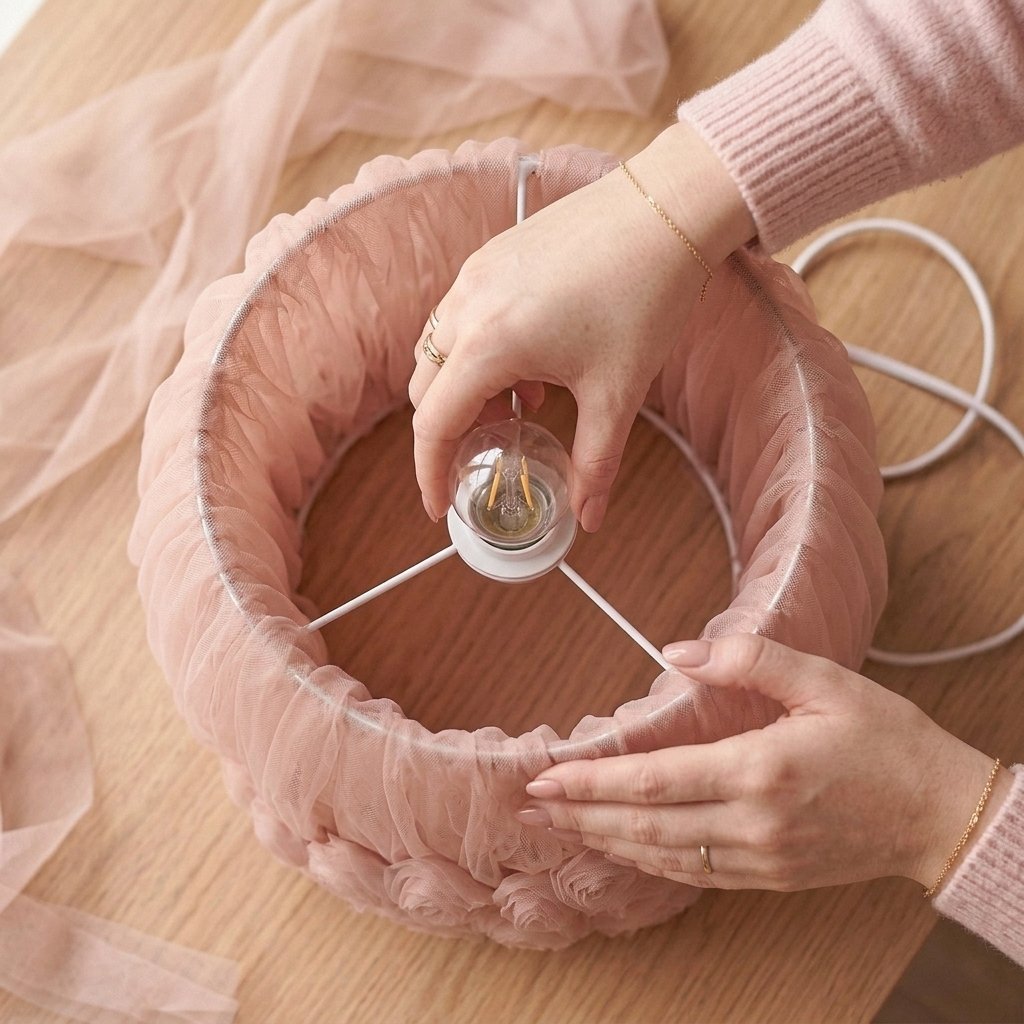
Keep adding strips until the frame is fully covered and noticeably fluffy — you’re aiming for a soft, cloud-like density that glows rather than a flat layer you can see straight through. Fluff and separate the tulle with your fingers as you go for that bouffant, ballerina-tutu texture.
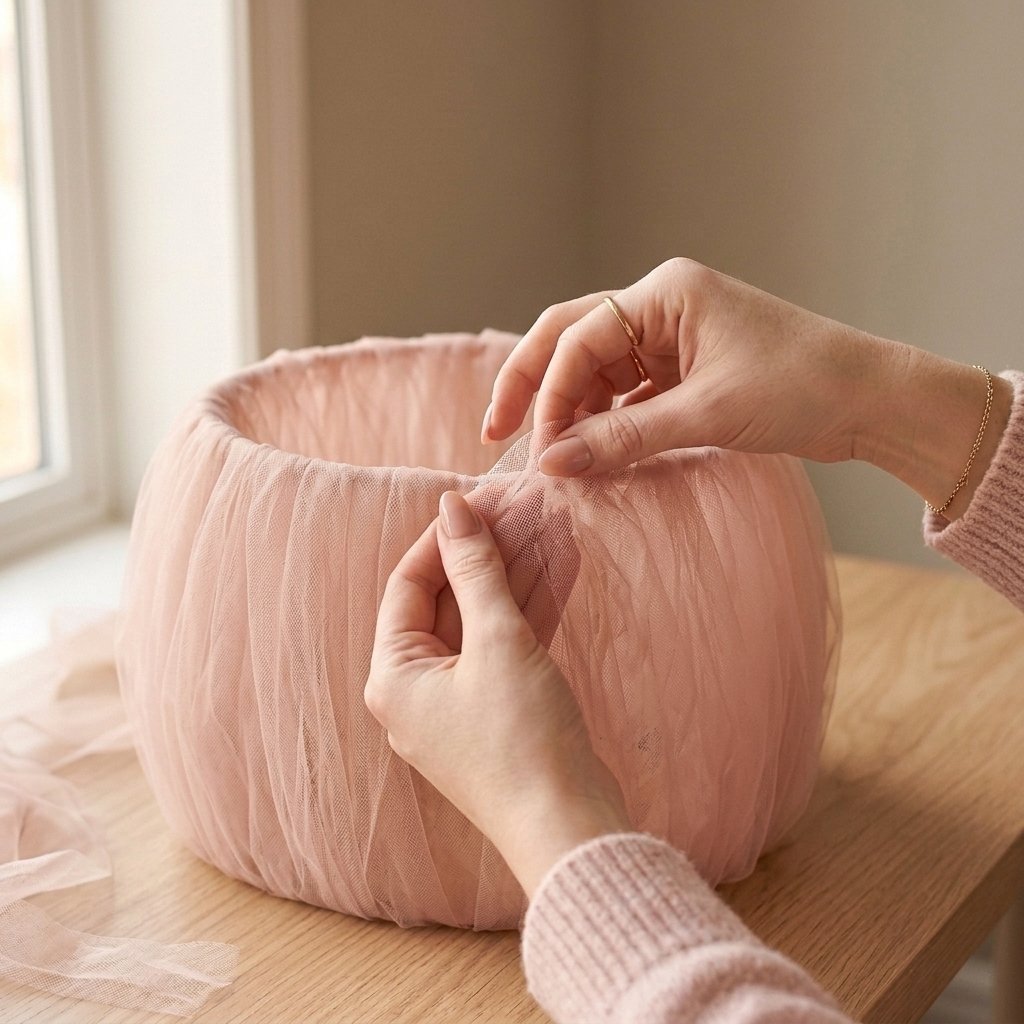
Step 5: Create the Tulle Flowers
Cut several small tulle circles or squares, about 4 inches across, and stack 3–4 layers together. Pinch the center tightly and secure it with a small dab of hot glue or a twist of floral wire, then fan out the layers into a soft rosette shape. Repeat until you have a dozen or so flowers in varying sizes.
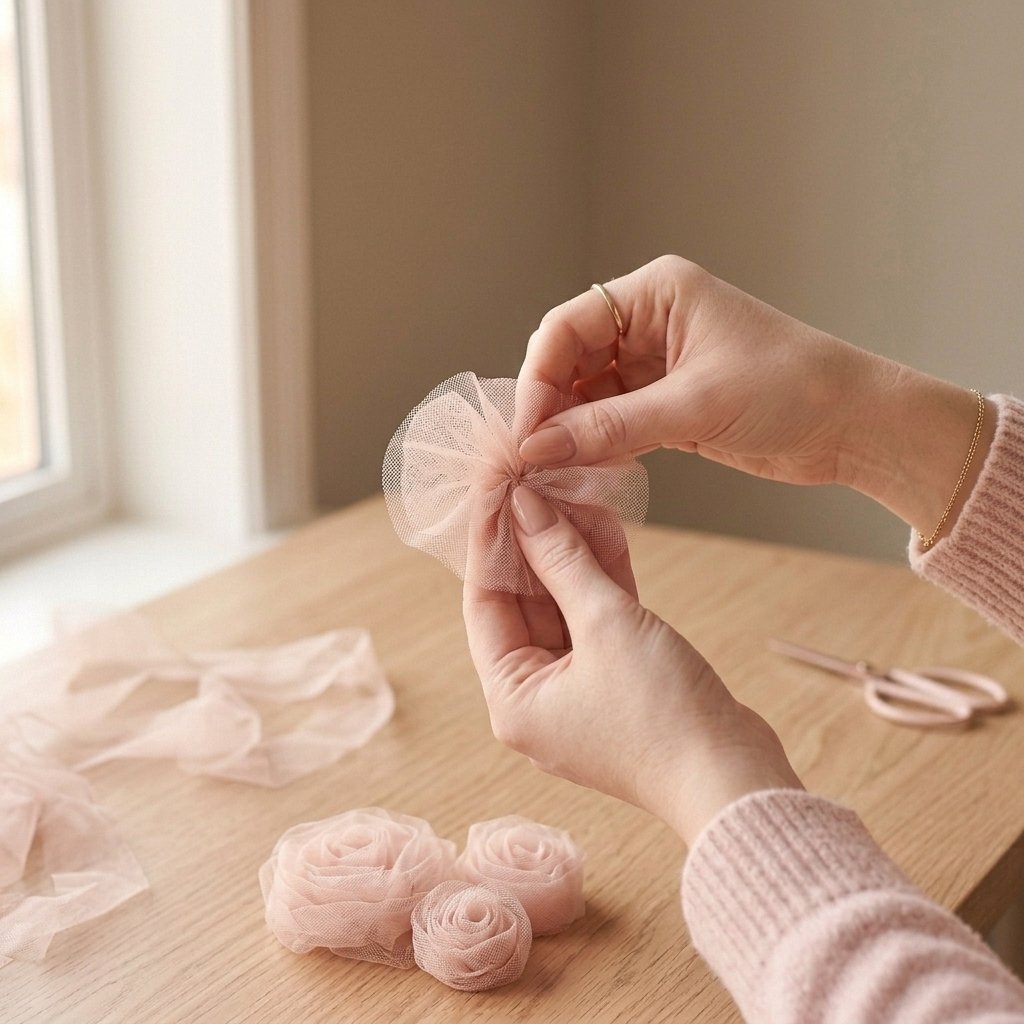
Step 6: Attach the Flowers Around the Base
Working around the bottom rim of the shade, hot-glue the tulle flowers in place, staggering large and small blooms for a natural, garden-gathered look. Let a few flowers sit slightly higher up the sides for extra dimension.
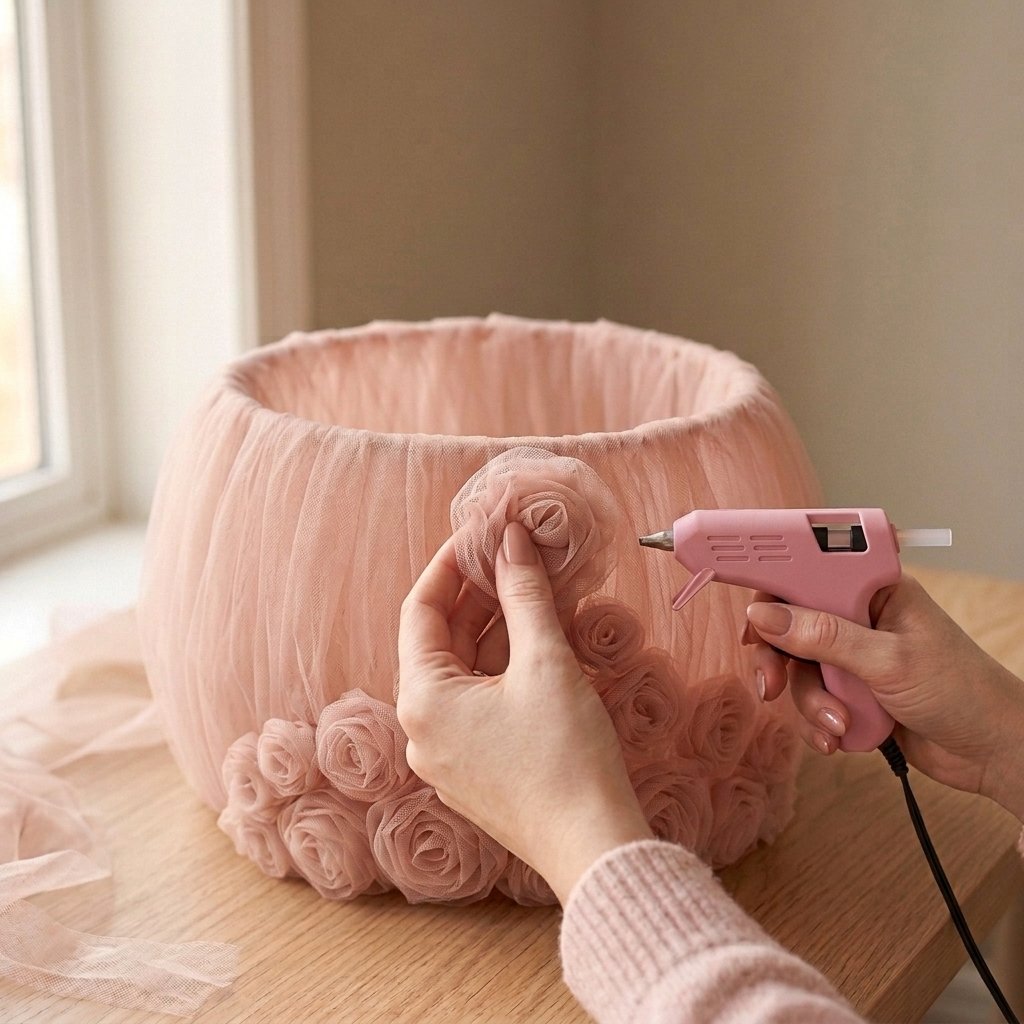
Step 7: Add the Bulb and Hang Your Lamp
Fit your cool-touch LED bulb into the socket, thread the cord through the top of the shade, and hang it from your ceiling hook or existing fixture. Switch it on and watch the light melt softly through every layer of tulle.
Pro Tips for the Fullest Tulle Shade
- Vary your strip widths. Mixing some 4-inch and some 8-inch strips adds natural texture instead of a uniform, flat look.
- Wrap loosely, not tightly. Tighter wraps flatten the tulle; looser wraps puff up into that soft, cloud-like fullness.
- Blend two shades of pink. A mix of blush and dusty rose tulle adds subtle depth that a single flat color won’t.
- Let it rest overnight. Tulle relaxes and opens up after a day, so give your shade a final fluff before you photograph or hang it.
- Dress up the cord. A fabric-covered lamp cord keeps the romantic look going all the way to the ceiling.
Styling Ideas: Where to Hang Your Tulle Pendant Light
This soft, romantic lighting idea works beautifully in more spots than just a bedroom:
- Above a vanity or makeup corner for warm, flattering light while you get ready.
- Beside a reading nook or window seat to add a cozy glow for evening reading.
- In a nursery or a little one’s room for a gentle, fairytale-inspired night light.
- Over a small side table in a boho-styled living corner for texture and softness.
Pair it with warm-white string lights, a woven throw, and soft neutral or blush tones nearby so the tulle lampshade stays the star of the room.
Final Thoughts
This DIY tulle lampshade proves that the most charming home decor doesn’t need to be complicated or expensive. With one roll of tulle, a simple frame, and an easy-going afternoon, you’ll have a one-of-a-kind pendant light that looks like it came from a boutique home shop. Save this idea for your next slow weekend project, and don’t be surprised if it becomes the first thing people notice in the room.
Related Posts:
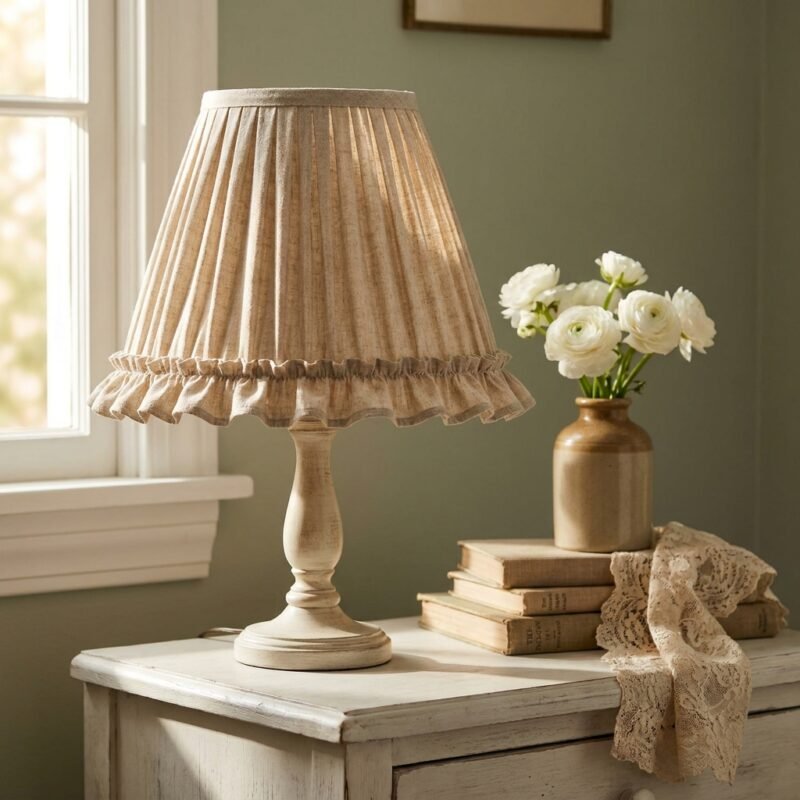
- DIY French Vintage Ruffle Lampshade: An Easy No-Sew Tutorial
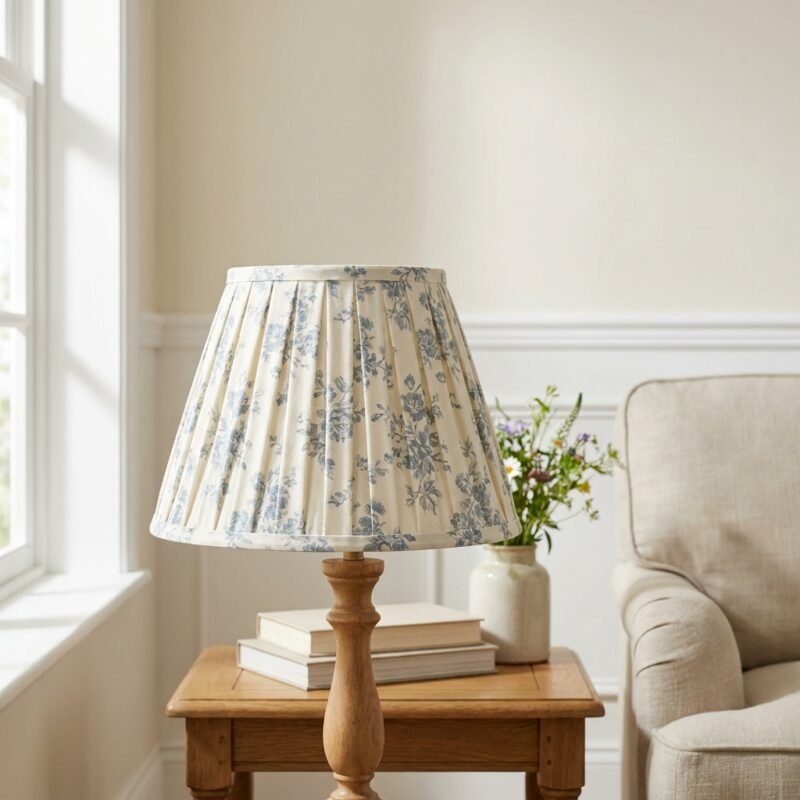
- DIY Pleated Lampshade: No-Sew Fabric Tutorial Step by Step
Frequently Asked Questions
- Is tulle safe to use for a lampshade?
Yes, as long as you pair it with a cool-touch LED bulb. LEDs give off very little heat, which keeps the surrounding tulle safe. Avoid incandescent or halogen bulbs, which can get too hot near fabric.
- Do I need any sewing skills for this DIY?
No. This entire project is no-sew — every step relies on wrapping, tying, and hot-gluing, so it’s an easy, beginner-friendly weekend craft.
- How long does this project take to make?
Most people finish a medium-sized tulle pendant lampshade in about 1–2 hours, plus extra time if you want to make a larger batch of flowers.
- Can I use a different tulle color?
Absolutely. Blush pink gives that soft, romantic look, but ivory, lavender, or sage green tulle all create the same dreamy glow in a different palette.
- How much tulle do I need for one lampshade?
One 25-yard roll of 6-inch tulle is usually enough to fully wrap a 10–12 inch frame, plus a little extra for the flowers. Grab a second roll if you want an extra-fluffy finish.
- Where should I hang a tulle pendant lampshade?
Anywhere you want soft, ambient light rather than bright overhead lighting — a bedroom ceiling, a reading corner, above a vanity, or a nursery all work well.
- What type of tulle works best for this project?
Soft, fine-mesh tulle drapes and gathers best for this kind of shade. Avoid stiff, glittery, or extra-firm tulle (often sold for tutus), since it holds its shape rather than falling into soft, cloud-like folds, and it diffuses light less evenly.
- Do I need a special wire frame, or can I repurpose something?
A purpose-made round wire lampshade frame gives the cleanest result, but a sturdy embroidery hoop, an old lampshade with the original fabric removed, or even a wire hanging basket frame can all work as a base in a pinch.
- What wattage bulb should I use?
Stick to a low-wattage LED, roughly 40-watt equivalent or less. LEDs run cool regardless of wattage, but a lower-output bulb also keeps the glow soft and warm instead of overpowering through the sheer tulle.
- How many tulle flowers should I make?
Around 14 to 16 flowers in a mix of small, medium, and large sizes is enough to fully ring the bottom edge of a 10–12 inch shade without looking sparse or overcrowded.
- What size frame should I choose?
A 10–12 inch diameter frame suits most bedside or corner placements. Size up to around 14 inches if you’re hanging it as a central ceiling fixture in a larger room.
- Can this be turned into a table lamp instead of a pendant?
Yes. Skip the ceiling cord kit and set your finished tulle shade on top of any lamp base with a matching harp and finial, using the same cool-touch LED bulb for safety.
- How do I keep the tulle looking full over time?
Give it an occasional gentle fluff with your fingers, and keep it away from direct daily handling. Tulle holds its shape well and rarely needs more than a light reshaping every few months.
- Can I use this as a nightlight for a child’s room?
Yes — with a low-wattage LED it gives off a soft, dim glow that works nicely as a nursery or kids’ room night light. Just hang it out of reach of curious little hands.
- What if my wrapping looks uneven or messy?
That’s completely normal, and part of the charm — this shade is meant to look soft and handmade rather than machine-perfect. If a section looks too thin, simply tuck in a few extra tulle strips to fill the gap.
- Is a tulle lampshade a good handmade gift idea?
Absolutely. It’s inexpensive to make, doesn’t require sewing skills, and feels genuinely thoughtful and personal — a lovely handmade gift for a bridal shower, nursery reveal, or anyone who loves soft, romantic decor.