
Updated: October 2026
Edition: 2027
Research by: LuxeHomeDecors
Coverage: Global research, with U.S. and international data identified where applicable
Biophilic design has moved well beyond the idea of simply adding a few houseplants to a room. In homes, workplaces, healthcare environments and public spaces, the term increasingly describes a broader attempt to reconnect indoor environments with nature through daylight, plants, views, natural materials, airflow, water, organic forms and nature-inspired spatial experiences.
Interest is rising quickly. U.S. Houzz searches for “biophilic design” increased 112% year over year in early 2026, while new workplace research shows strong demand for natural light, greenery and access to outdoor spaces. At the same time, scientific research offers a more nuanced picture: some nature-based interventions show measurable benefits for wellbeing, sleep, workplace experience and certain performance measures, while other widely repeated claims remain unproven.
This report brings together more than 50 statistics and research findings from peer-reviewed studies, systematic reviews, government sources and major international surveys. Where evidence is observational rather than experimental, we say so.
Research note: “2027” refers to this edition of the report. The underlying evidence is current through October 2026 and includes both recent and foundational studies.
Biophilic Design Statistics at a Glance
| Finding | What the data says |
|---|---|
| +112% | U.S. Houzz searches for “biophilic design” increased 112% from January–March 2025 to January–March 2026. |
| 90% | People in the U.S. spend about 90% of their time indoors, according to the EPA. |
| 43% | In Gensler’s 2026 global workplace research, 43% of workers said they want outdoor areas and access to nature in the future workplace. |
| 40% | Gensler’s 2025 survey found 40% of global office workers prioritized natural light and operable windows. |
| 36% | The same survey found 36% preferred workplaces enhanced with greenery. |
| 15% | A major 2015 global workplace survey found workers in environments with natural elements reported 15% higher wellbeing and 15% higher creativity. |
| Up to 15% | Three field experiments found that enriching otherwise lean commercial offices with plants could raise measured productivity by as much as 15% in the studied settings. |
| 46 minutes | A small office-worker pilot study found workers with windows slept an average 46 minutes longer per worknight than workers in windowless environments. |
| 37 minutes | A later crossover study of 30 workers found 37 minutes more sleep under an optimized daylight-and-views condition. |
| 140 studies | A 2026 systematic review assessed 140 nature-exposure studies from 36 countries, representing more than 212,000 participants. |
The strongest takeaway is not that every “natural” interior automatically improves health or productivity. Rather, the evidence increasingly suggests that access to real nature, daylight, views and thoughtfully integrated greenery can influence how people experience and sometimes perform within built environments, while the strength of that effect varies significantly between settings and studies.
What Is Biophilic Design?
Biophilic design is an approach to the built environment that deliberately strengthens people’s connection with nature. It can include direct experiences of nature—such as plants, water, natural light and views—as well as natural materials, patterns, forms, spatial arrangements and environmental conditions that resemble experiences found in nature.
One influential framework, Terrapin Bright Green’s 14 Patterns of Biophilic Design, originally organized biophilic strategies into 14 patterns across three broad categories: Nature in the Space, Natural Analogues and Nature of the Space. The 10th-anniversary edition, revised in April 2026, incorporates Awe as a 15th pattern.
That matters because biophilic design should not be treated as another word for “decorating with plants.” A room with excellent daylight, views of trees, natural materials and opportunities to move between indoor and outdoor space may have a strong biophilic character even without dozens of potted plants.
How Popular Is Biophilic Design?
Current search and workplace-preference data point to a substantial increase in interest.
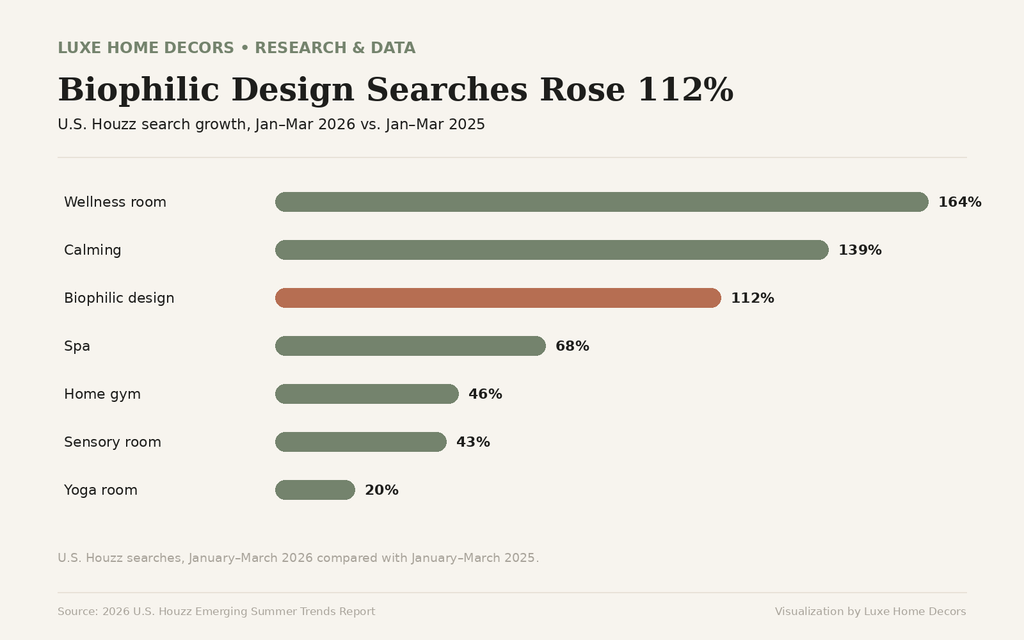
Houzz’s 2026 U.S. Emerging Summer Trends Report compared search activity from January through March 2026 with the same period in 2025. Searches for “biophilic design” rose 112% year over year. The increase appeared alongside a broader shift toward wellness-oriented interiors: searches for “wellness room” increased 164%, “calming” increased 139%, “spa” increased 68%, “home gym” increased 46%, “sensory room” increased 43%, and “yoga room” increased 20%. These are Houzz platform searches in the United States, not Google search-volume figures, but they provide a useful indicator of changing homeowner and design interest.
Growth in wellness- and nature-oriented Houzz searches
| Search term | Year-over-year increase |
|---|---|
| Wellness room | 164% |
| Calming | 139% |
| Biophilic design | 112% |
| Spa | 68% |
| Home gym | 46% |
| Sensory room | 43% |
| Yoga room | 20% |
Source: 2026 U.S. Houzz Emerging Summer Trends Report; U.S. searches January–March 2026 compared with January–March 2025.
Publisher use: You may reproduce this original LuxeHomeDecors visualization with attribution and a followed link to this research report. Please retain the original research source named below the graphic.
Why Indoor Design Matters: We Spend Most of Our Lives Inside
The case for paying closer attention to indoor environments starts with a simple statistic: people spend an enormous amount of time inside buildings.
The U.S. Environmental Protection Agency states that people spend, on average, about 90% of their time indoors. The EPA also notes that levels of some indoor pollutants are often two to five times higher than typical outdoor concentrations.
Biophilic design should not be confused with indoor-air-quality management—ventilation, source control and filtration remain separate issues—but the amount of time spent indoors helps explain why researchers are interested in how light, views, plants, materials and other environmental characteristics affect human experience.
In other words, the design of indoor space is not a minor aesthetic question when indoor space is where most daily life occurs.
What Do Workers Want From Nature-Inspired Workplaces?
The strongest large-scale preference data currently comes from international workplace surveys.
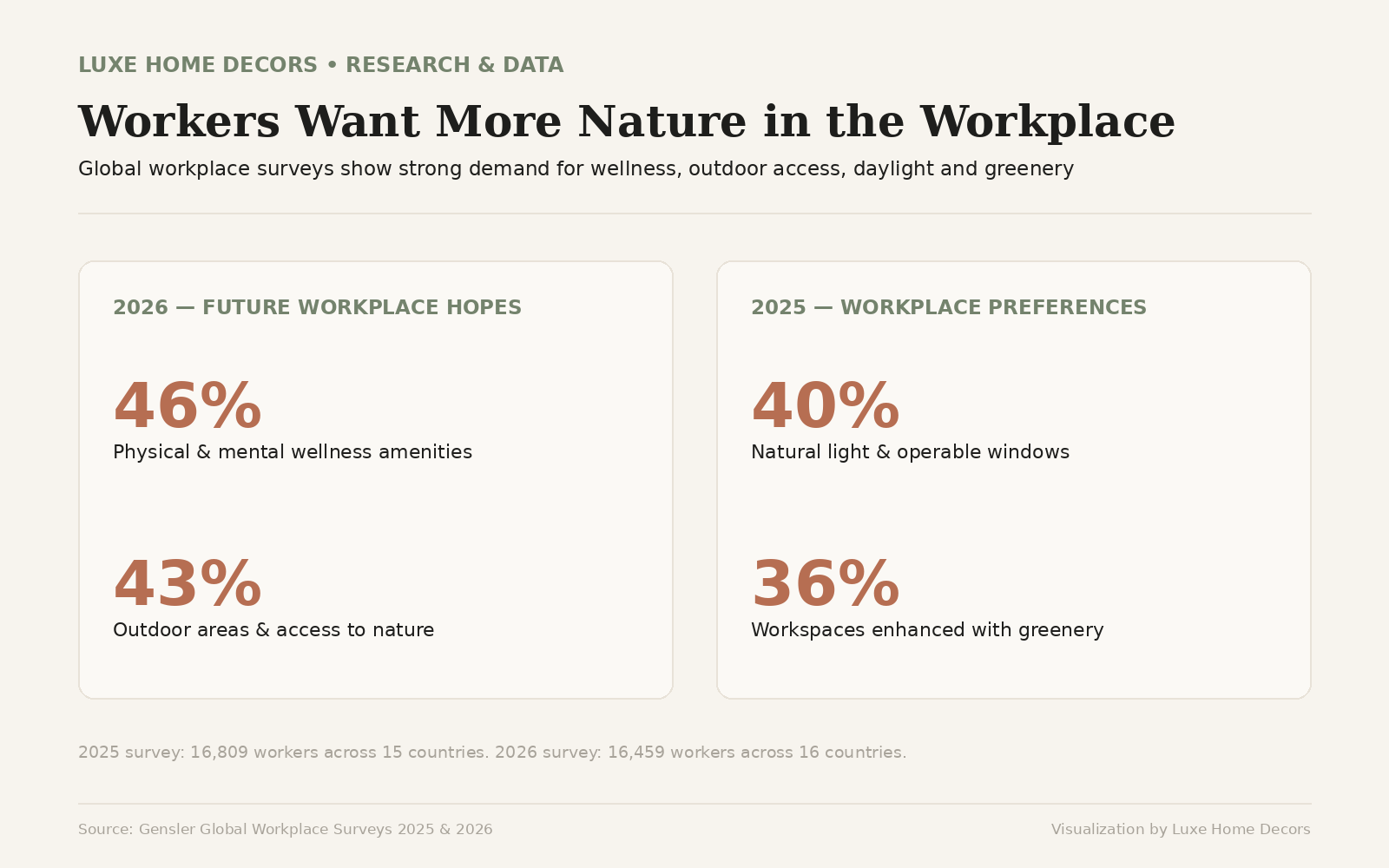
Gensler’s Global Workplace Survey 2025 surveyed 16,809 full-time office workers across 15 countries and 10 industries. It found that 40% of workers prioritized access to natural light and operable windows, while 36% preferred workplaces enhanced with greenery. Only 14% said they wanted a traditional “corporate” workplace experience.
The same research found that only 26% of workers strongly agreed their current workplace helped them do their best work. Among employees who said they liked their workspace, 90% said they were proud to work for their company, compared with 47% among employees who felt disconnected from their workplace. These figures show strong associations with workplace experience, although they do not establish that design alone caused differences in employee pride or performance.
Gensler’s 2026 Global Workplace Survey expanded the research to 16,459 full-time office workers across 16 countries. When respondents were asked what they hoped their future physical workplace would contain, 46% selected physical and mental wellness amenities, while 43% selected outdoor areas and access to nature.
Nature-related workplace preferences
| Finding | Percentage |
|---|---|
| Workers prioritizing natural light and operable windows | 40% |
| Workers preferring greenery in the workplace | 36% |
| Workers wanting outdoor areas/access to nature in future workplaces | 43% |
| Workers wanting physical and mental wellness amenities | 46% |
| Workers wanting a traditional corporate workplace experience | 14% |
| Workers strongly agreeing their workplace helps them do their best work | 26% |
Sources: Gensler Global Workplace Surveys 2025 and 2026.
Publisher use: You may reproduce this original LuxeHomeDecors visualization with attribution and a followed link to this research report. Please retain the original research source named below the graphic.
Biophilic Design and Workplace Wellbeing Statistics
One of the most frequently cited studies in biophilic workplace design is the 2015 Human Spaces Global Report, commissioned by Interface and led by organizational psychologist Sir Cary Cooper.
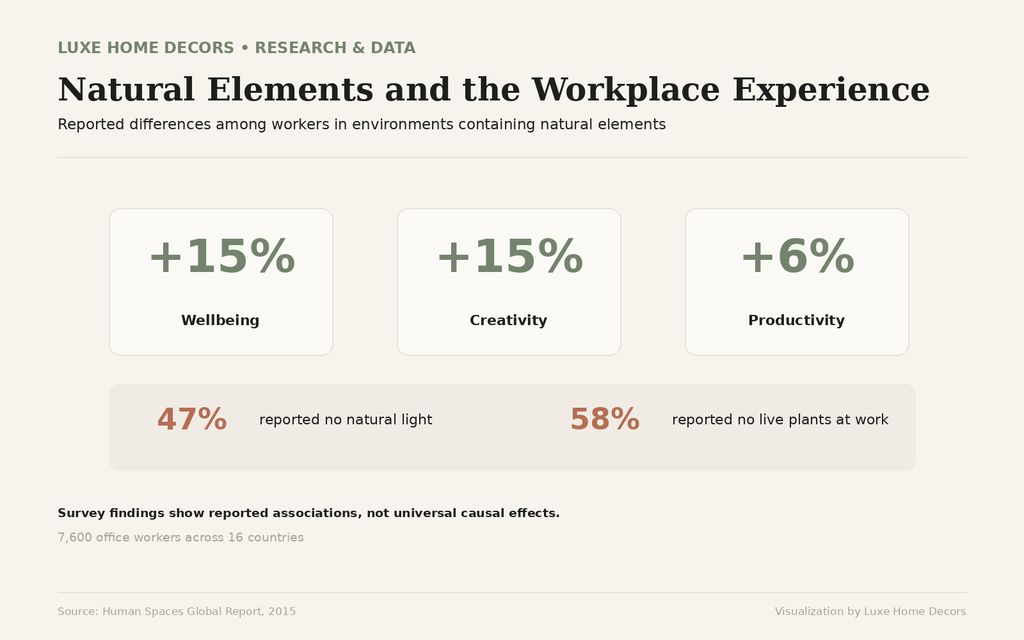
The research collected responses from 7,600 office workers across 16 countries. Workers in environments containing natural elements such as greenery and sunlight reported 15% higher wellbeing, 6% higher productivity and 15% higher creativity than workers in environments without the same connection to nature.
The report also found that 33% of respondents said workplace design would affect their decision about whether to work for an organization. The percentage was considerably higher in some participating countries: 67% in India, 62% in Indonesia and 60% in the Philippines.
At the time of the study, 47% of surveyed office employees reported having no natural light in their working environment, while 58% reported having no live plants in their workspace. The report also noted that 27% of U.S. workers, 28% of Australian workers and 32% of Canadian workers reported having no windows.
Another 85% of the workers surveyed were based in what the researchers classified as an urban environment, emphasizing the relevance of access to natural elements for increasingly urban workforces.
These figures are valuable, but they should be described correctly. Human Spaces was a large international workplace survey, not a randomized trial. Its 15%, 6% and 15% figures therefore represent reported differences and associations, not proof that adding a plant to an office will automatically produce a 6% productivity increase.
That distinction becomes important when the survey evidence is compared with controlled workplace interventions.
Do Plants Increase Workplace Productivity?
There is experimental evidence suggesting they can under some conditions.
A 2014 peer-reviewed study published in the Journal of Experimental Psychology: Applied conducted three field experiments in large commercial offices in the Netherlands and the United Kingdom. Researchers compared minimalist “lean” offices with offices enriched by plants. Two experiments followed interventions longitudinally over subsequent weeks and months.
Across the three experiments, plant-enriched offices showed improvements in outcomes including workplace satisfaction, perceived air quality, concentration and objective productivity measures. The researchers reported that enriching an otherwise lean office with plants could produce a productivity increase of up to 15% in the studied conditions.
The wording “up to” is important. The study does not establish a universal 15% productivity increase for every workplace, every worker or every type of plant intervention.
What Recent Office-Plant Research Found?
A larger Dutch field study published in Frontiers in Psychology in 2023 examined plant interventions across nine organizations.
Researchers invited 1,134 employees, and 594 completed the pre-intervention questionnaire, a response rate of approximately 52%. Of those initial respondents, 254 completed both the pre-measurement and first post-measurement, while 128 completed the pre-measurement and the later second post-measurement. COVID-19 disrupted parts of the study. The researchers originally tracked 18 outcome variables.
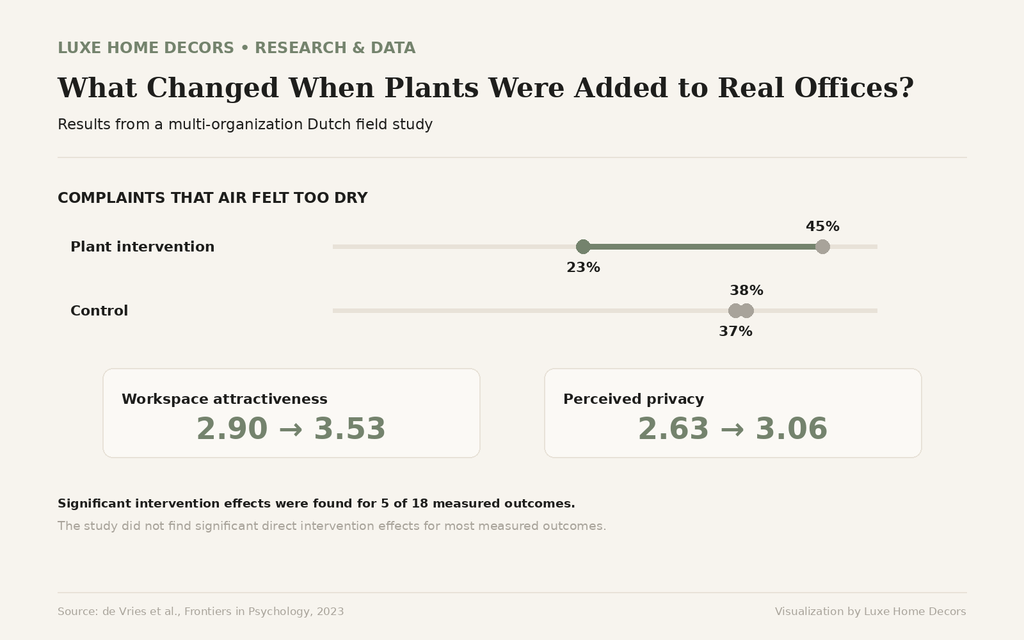
Plant introduction ultimately produced significant effects for five outcomes in the analyses incorporating both post-intervention measurements: complaints about dry air, perceived privacy, visual attractiveness, satisfaction with the workspace and health-related complaints that became worse at work.
One especially visible change involved perceived dry air. In the intervention spaces, the percentage of workers complaining that the air was too dry fell from 45% before plants were introduced to 23% at the first post-measurement. In control workplaces, it barely changed, from 38% to 37%.
Perceived privacy in the intervention condition rose from an average score of 2.63 to 3.06, while ratings of workspace attractiveness rose from 2.90 to 3.53. Some significant effects remained visible at least four months after the intervention.
Importantly, researchers did not find significant intervention effects for most of the 18 measured variables. This is useful evidence precisely because it prevents an exaggerated conclusion: plants clearly changed several aspects of workplace experience, but they did not demonstrably improve everything from stress to concentration to job satisfaction in this particular study.
Indoor Plants and Human Function: What the Meta-Analysis Says
A 2022 systematic review and meta-analysis provides a broader view of the indoor-plant literature.
Researchers reviewed 42 studies concerning indoor plants and human functioning. Only 16 records contained suitable data for the separate meta-analyses, illustrating how much of the evidence base remains difficult to combine quantitatively.
Among the outcomes that could be pooled, indoor-plant exposure was associated with a statistically significant reduction in diastolic blood pressure of 2.526 mmHg, with a 95% confidence interval from −4.142 to −0.909 mmHg.
The meta-analysis also found a statistically significant pooled effect for academic achievement of 0.534 standardized units, with a 95% confidence interval from 0.167 to 0.901. However, that analysis was based on only two studies involving 119 participants, so it should not be interpreted as firm evidence that adding plants to a classroom universally raises academic performance.
The attention analysis did not find a statistically significant pooled benefit. It included three studies and 177 participants, with the combined effect effectively close to zero. Response-time findings were also not statistically significant.
The authors themselves highlighted an important limitation: the individual meta-analyses generally relied on only two or three studies per outcome.
That makes the most defensible summary:
Indoor plants appear capable of influencing some physiological, psychological and performance-related outcomes, but evidence is considerably stronger for some outcomes than for others.
Do Houseplants Really Clean Indoor Air?
This is one of the most repeated—and most misleading—claims surrounding indoor plants.
Plants can remove certain volatile organic compounds in small sealed laboratory chambers. That does not mean that a normal number of houseplants meaningfully cleans the air in an occupied home.
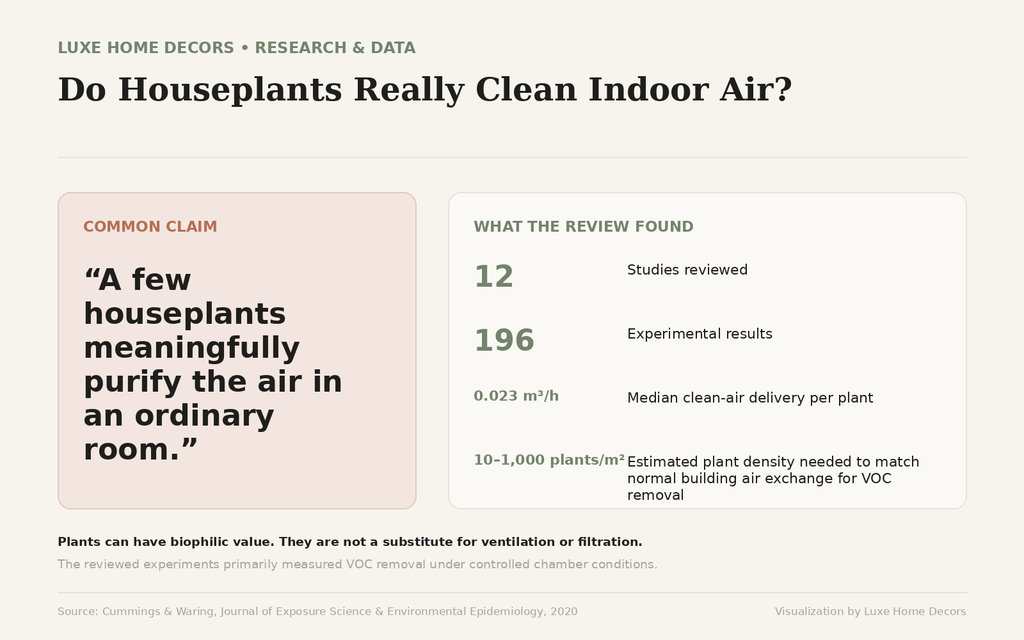
A 2020 review in the Journal of Exposure Science & Environmental Epidemiology analyzed 12 previously published chamber studies containing 196 experimental results. Researchers converted those findings into a comparable clean-air-delivery-rate measure.
The median clean air delivery rate for one plant was only 0.023 cubic metres per hour.
The researchers estimated that achieving VOC removal comparable to the air exchange already occurring in a typical building would require roughly 10 to 1,000 plants per square metre of floor area.
Key takeaway – Houseplants can still contribute to visual connection with nature, enjoyment and the character of an interior. But ordinary houseplant collections should not be marketed as substitutes for ventilation, filtration or indoor-air-quality control.
If improving airborne-particle filtration is the goal, our guide to the best air purifiers for plant-filled homes explains what to look for in bedrooms, living rooms and larger open-plan spaces.
This distinction is particularly important because the EPA notes that concentrations of some indoor pollutants can already be two to five times higher indoors than outdoors.
MYTH: A few houseplants can purify the air in your home.
EVIDENCE: Laboratory plants can absorb VOCs, but research suggests a real building would need approximately 10–1,000 plants per square metre to compete with normal ventilation for VOC removal.
Natural Light and Sleep Statistics
Daylight is among the most researched components associated with biophilic environments.
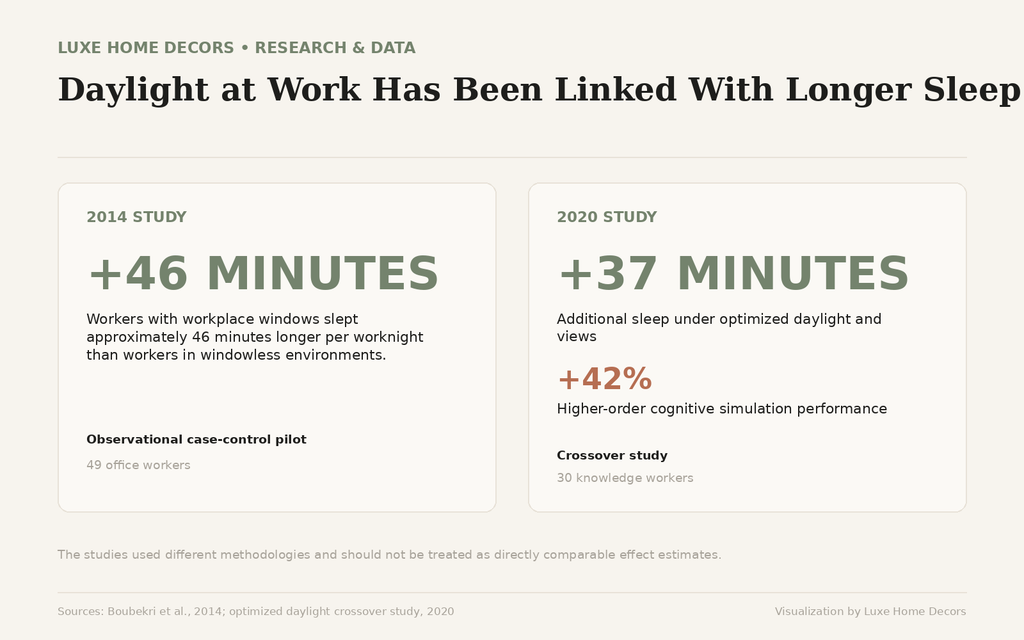
A 2014 case-control pilot study examined 49 office workers: 27 worked in windowless environments and 22 worked in workplaces with significantly more daylight. A subset of 21 participants also wore actigraphy devices that objectively recorded light exposure, activity and sleep-wake patterns.
Workers with windows received more light exposure during the workweek and slept approximately 46 minutes longer per night during the workweek than workers in windowless environments. Because the study was small and observational, it cannot establish that windows alone caused the sleep difference. It nevertheless helped motivate later controlled research into daylight exposure and office performance.
Publisher use: You may reproduce this original LuxeHomeDecors visualization with attribution and a followed link to this research report. Please retain the original research source named below the graphic.
A 2020 crossover study took that research further.
Thirty knowledge workers spent one week in each of two nearly identical office environments. One used traditional blinds; the other used electrochromic glazing designed to improve daylight and views. The two conditions produced average lighting levels of approximately 40.6 versus 316 equivalent melanopic lux.
In the optimized daylight-and-views condition, participants slept 37 minutes longer as measured by wrist-worn actigraphy and scored 42% higher on cognitive simulations designed to measure higher-order decision-making.
The study was small and short-term, and some researchers were affiliated with View Inc., the company associated with the electrochromic glazing technology. It is therefore best treated as promising experimental evidence rather than a universal estimate of what daylight will do in every office.
Views of Nature and Recovery
One of the foundational studies in evidence-based biophilic design predates the term’s current popularity.
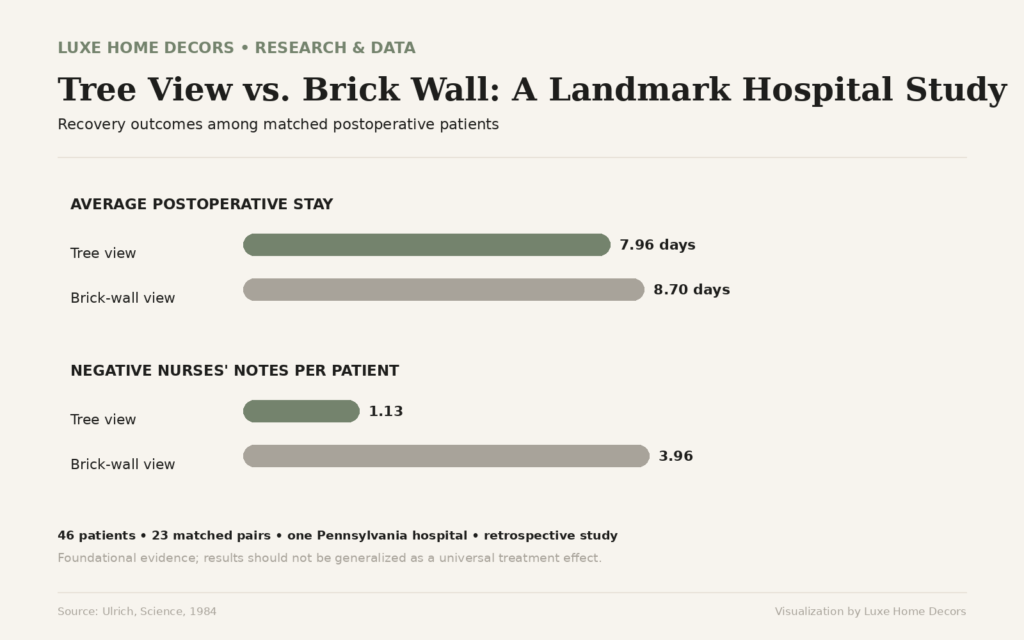
Roger Ulrich’s 1984 paper in Science, “View through a window may influence recovery from surgery,” examined records from 46 patients arranged into 23 matched pairs recovering from gallbladder surgery in a Pennsylvania hospital. Half had windows overlooking trees; the matched patients had windows facing a brick wall. Patients with tree views had an average postoperative stay of 7.96 days, compared with 8.70 days for patients whose windows faced the wall—a difference of 0.74 days.
Publisher use: You may reproduce this original LuxeHomeDecors visualization with attribution and a followed link to this research report. Please retain the original research source named below the graphic.
Nurses recorded an average of 1.13 negative evaluative notes per patient in the tree-view group compared with 3.96 per patient among those facing the brick wall. The tree-view patients also received fewer potent analgesics during part of the recovery period.
The study remains historically important, but it was retrospective, involved one hospital, one surgical procedure and a relatively small group of patients. It should therefore be described as foundational evidence, not proof that any green view will reduce every hospital stay by three-quarters of a day.
| Outcome | Tree view | Brick-wall view |
|---|---|---|
| Average postoperative stay | 7.96 days | 8.70 days |
| Negative nurses’ notes per patient | 1.13 | 3.96 |
Source: Ulrich, Science, 1984.
What Does the Latest Research Say About Nature and Wellbeing?
One of the most important updates to the evidence base arrived in 2026.
A systematic review and meta-analysis published in Indoor Environments reviewed 140 peer-reviewed studies from 36 countries. Combined, the reviewed studies represented 212,264 participants.
Researchers identified 434 separate assessment instances across those studies, showing just how many different ways nature-related wellbeing has been measured.
Only 16 of the 140 studies, contributing 45 effect sizes, met the researchers’ criteria for the final meta-analysis. In other words, only about 11.4% of the reviewed studies provided data suitable for this particular quantitative synthesis.
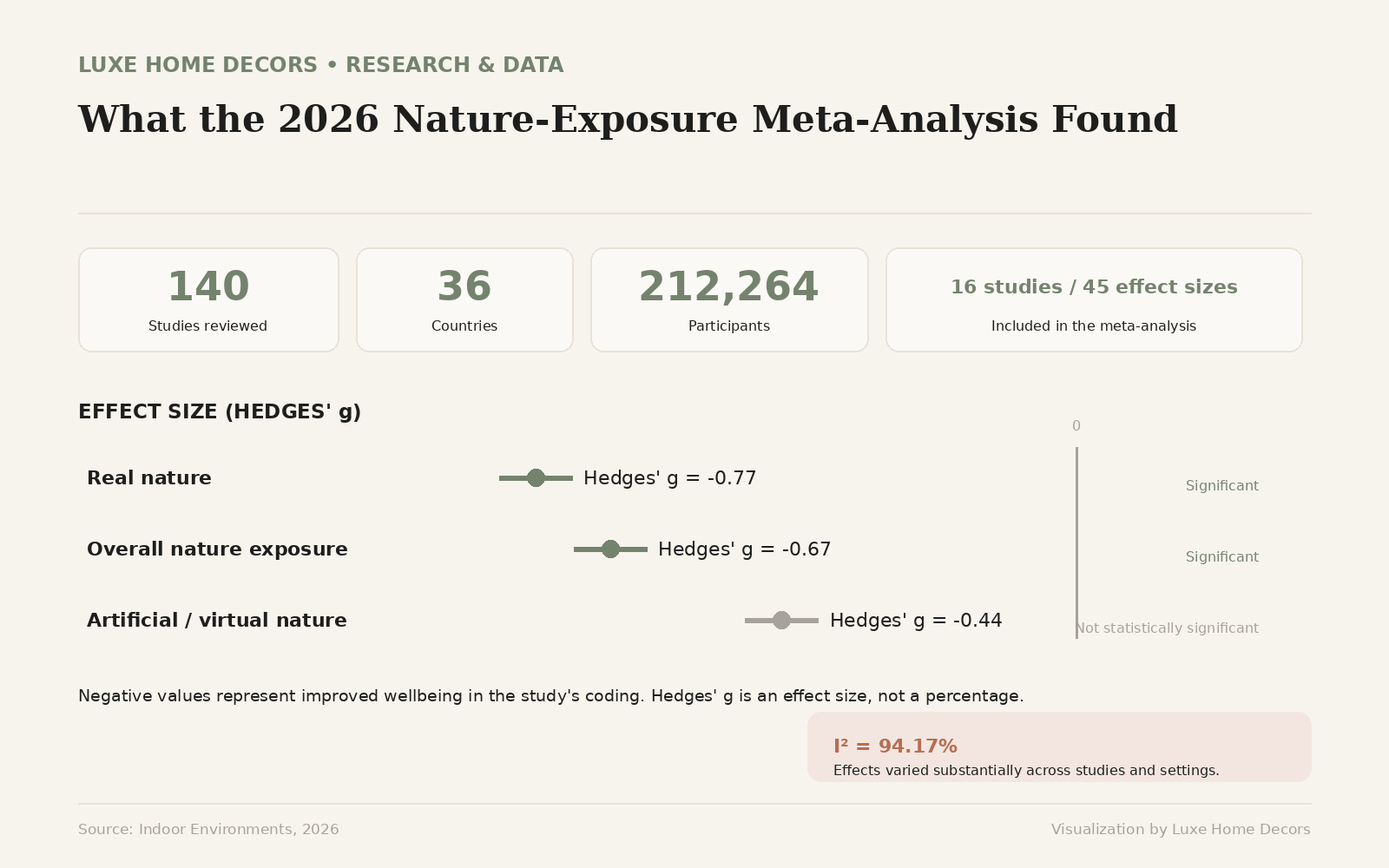
The pooled analysis found a statistically significant beneficial overall effect of nature exposure on wellbeing, with Hedges’ g = −0.67 and a 95% confidence interval of −1.16 to −0.18. In the authors’ coding system, negative values represented improved wellbeing.
However, the heterogeneity statistic was I² = 94.17%, indicating extremely large variation between study results.
That matters.
It means the literature supports an average beneficial relationship, but the size of the effect differs substantially depending on context, intervention, exposure length and method of measurement.
The study’s 95% prediction interval stretched from −2.81 to 1.48, crossing zero. That means a future well-designed study in a different setting could plausibly find a large beneficial effect, little effect or even an unfavorable result.
Publisher use: You may reproduce this original LuxeHomeDecors visualization with attribution and a followed link to this research report. Please retain the original research source named below the graphic.
Is Real Nature More Effective Than Virtual Nature?
The same 2026 meta-analysis produced an especially interesting comparison.
Exposure to real nature showed a statistically significant pooled beneficial effect of g = −0.77.
Artificial or virtual nature exposure showed a smaller pooled effect of g = −0.44, which did not reach statistical significance in the analysis.
That does not prove virtual nature has no value. The amount and quality of evidence differed across exposure types.
What it does suggest is that current evidence provides a stronger quantitative case for genuine contact with natural environments than for treating digital representations as equivalent substitutes.
At home, that can mean strengthening everyday access to balconies, patios and garden spaces. Our guide to indoor-outdoor living ideas for 2027 explores practical ways to create a stronger connection between interior and exterior spaces.
Why Biophilic Research Still Needs Better Measurement
The 2026 systematic review uncovered a striking methodological problem.
Across its 140 studies, researchers identified 434 instances of wellbeing measurement. Yet the 10 most commonly used assessment methods accounted for only 26.3% of all measurement instances. Nearly three quarters came from a long tail of less commonly used methods.
Among the individual methods included in the meta-analysis, the Perceived Restorativeness Scale produced the largest pooled effect, g = −1.75, followed by Total Mood Disturbance at g = −1.42 and skin conductance at g = −0.40.
These differences do not necessarily mean one form of nature exposure is dramatically better than another. They show that what researchers choose to measure can influence the size of the effect they detect.
This is one reason dramatic single-number claims about biophilic design should be treated cautiously.
Publisher use: You may reproduce this original LuxeHomeDecors visualization with attribution and a followed link to this research report. Please retain the original research source named below the graphic.
| Analysis | Pooled effect |
|---|---|
| Overall nature exposure | g = −0.67 |
| Real nature exposure | g = −0.77 |
| Artificial/virtual nature | g = −0.44, not statistically significant |
| Perceived Restorativeness Scale | g = −1.75 |
| Total Mood Disturbance | g = −1.42 |
| Skin conductance | g = −0.40 |
Negative values represent improvement under the study’s coding. Results should not be directly compared without considering study design, sample size and measurement method.
50+ Biophilic Design Statistics: Quick Reference
For writers, designers and researchers who need the figures quickly, the evidence above can be summarized as follows.
| # | Verified statistic or research finding |
|---|---|
| 1 | U.S. Houzz searches for “biophilic design” increased 112% year over year in early 2026. |
| 2 | “Wellness room” searches rose 164% on Houzz. |
| 3 | Searches using “calming” as a design keyword rose 139%. |
| 4 | “Spa” searches increased 68%. |
| 5 | “Home gym” searches increased 46%. |
| 6 | “Sensory room” searches increased 43%. |
| 7 | “Yoga room” searches increased 20%. |
| 8 | People spend about 90% of their time indoors, according to the U.S. EPA. |
| 9 | Levels of some indoor pollutants are often 2–5 times typical outdoor levels. |
| 10 | Gensler’s 2025 workplace survey included 16,809 workers. |
| 11 | Those workers came from 15 countries and 10 industries. |
| 12 | 40% prioritized natural light and operable windows. |
| 13 | 36% preferred workspaces enhanced with greenery. |
| 14 | Only 14% wanted a traditional corporate workplace experience. |
| 15 | Only 26% strongly agreed their workplace helped them do their best work. |
| 16 | 90% of employees who liked their workspace said they were proud to work for their company. |
| 17 | The comparable figure was 47% among workers who felt disconnected from their environment. |
| 18 | Gensler’s 2026 survey included 16,459 workers across 16 countries. |
| 19 | 46% wanted physical and mental wellness amenities in future workplaces. |
| 20 | 43% wanted outdoor areas and access to nature. |
| 21 | The Human Spaces study surveyed 7,600 office workers across 16 countries. |
| 22 | Workers around natural elements reported 15% higher wellbeing. |
| 23 | They reported 6% higher productivity. |
| 24 | They reported 15% higher creativity. |
| 25 | 33% said office design could affect whether they worked for an organization. |
| 26 | 47% reported no natural light in their working environment. |
| 27 | 58% reported no live plants in their workspace. |
| 28 | 32% of Canadian respondents reported having no windows. |
| 29 | 28% of Australian respondents reported having no windows. |
| 30 | 27% of U.S. respondents reported having no windows. |
| 31 | 85% of Human Spaces respondents were based in an urban environment. |
| 32 | Three commercial-office field experiments found plant-enriched environments improved several workplace outcomes. |
| 33 | In those experiments, productivity gains reached up to 15% in the studied conditions. |
| 34 | A 2023 Dutch plant study involved nine organizations. |
| 35 | 1,134 employees were invited to participate. |
| 36 | 594, or roughly 52%, completed the pre-measurement. |
| 37 | Plant intervention effects were significant for five of 18 tracked outcome variables in the longer analysis. |
| 38 | Dry-air complaints in intervention offices fell from 45% to 23% after plants were introduced. |
| 39 | Control-office dry-air complaints changed only from 38% to 37%. |
| 40 | Workspace attractiveness in intervention offices rose from 2.90 to 3.53 on the study’s scale. |
| 41 | Some significant intervention effects remained after at least four months. |
| 42 | A 2022 indoor-plant systematic review included 42 studies. |
| 43 | Only 16 studies contributed data to its separate meta-analyses. |
| 44 | Indoor plants were associated with a pooled 2.526 mmHg reduction in diastolic blood pressure. |
| 45 | Its academic-achievement analysis produced a pooled standardized effect of 0.534, but was based on only two studies and 119 participants. |
| 46 | The pooled attention analysis, based on three studies and 177 participants, was not statistically significant. |
| 47 | A daylight pilot studied 49 office workers. |
| 48 | Workers with windows slept approximately 46 minutes longer per worknight in that study. |
| 49 | A later optimized-daylight crossover study included 30 workers. |
| 50 | Optimized daylight and views were associated with 37 additional minutes of sleep. |
| 51 | Participants also scored 42% higher on higher-order cognitive simulations. |
| 52 | Ulrich’s landmark hospital study compared 46 patients in 23 matched pairs. |
| 53 | Tree-view patients stayed an average 7.96 days, compared with 8.70 days for wall-view patients. |
| 54 | Negative nurses’ notes averaged 1.13 per tree-view patient versus 3.96 per wall-view patient. |
| 55 | A 2026 nature-exposure review included 140 studies across 36 countries. |
| 56 | Those studies represented 212,264 participants. |
| 57 | Only 16 studies and 45 effect sizes qualified for the final meta-analysis. |
| 58 | The pooled wellbeing effect was Hedges’ g = −0.67. |
| 59 | Between-study heterogeneity was extremely high at I² = 94.17%. |
| 60 | Real nature exposure produced a significant pooled effect of g = −0.77. |
| 61 | Artificial/virtual nature produced g = −0.44, which was not statistically significant. |
| 62 | Only 11.4% of reviewed studies provided suitable data for the meta-analysis used in the review. |
| 63 | The 10 most common measurement methods represented only 26.3% of all assessment instances. |
| 64 | A houseplant air-quality review analyzed 12 studies and 196 experimental results. |
| 65 | Median clean-air delivery was only 0.023 m³/hour per plant. |
| 66 | Researchers estimated 10–1,000 plants per square metre would be required to match normal building air exchange for VOC removal. |
What Are the Most Evidence-Supported Elements of Biophilic Design?
Based on the research reviewed here, the case is strongest for designing environments around meaningful access to daylight, genuine nature, views, greenery and opportunities for indoor-outdoor connection, rather than treating biophilic design as surface decoration.
For homes where outdoor growing space is limited, indoor smart gardens for herbs and greens can offer a practical way to incorporate living greenery into kitchens and compact spaces.
Plants have experimental evidence behind some workplace outcomes. Daylight research has identified associations and experimental differences in sleep and cognitive measures. Views of nature have a long research history. Broader meta-analytic evidence also finds an average wellbeing benefit from nature exposure, although results vary substantially across settings.
The research is less supportive of simplistic claims such as “one plant improves productivity by 15%,” “plants clean all indoor air,” or “biophilic design guarantees better health.”
Good biophilic design is better understood as a system of environmental choices, not a single product.
How We Researched This Report
Luxe Home Decors compiled this page as a reference resource for homeowners, designers, journalists and researchers seeking traceable statistics about biophilic design and nature in the built environment.
We prioritized peer-reviewed research, systematic reviews, government sources, original institutional reports and first-party survey publications. When a statistic widely repeated online could be traced to an original study, we used the original source rather than another blog quoting it.
We preserved important details such as sample size, geography, study design and publication date wherever they materially affect interpretation.
We also distinguish between different levels of evidence. A survey showing that workers around greenery report higher productivity is not described as though it were a randomized experiment proving that plants cause higher productivity. Similarly, results from workplace studies are not automatically presented as evidence about homes, hospitals or schools.
Commercial market-size estimates were excluded from this edition where the underlying methodology was proprietary, unclear or inconsistent across research firms.
Research was reviewed through October 2026. This page will be periodically updated as stronger or more recent evidence becomes available.
A Note on Interpreting Biophilic Design Research
Biophilic design research spans architecture, environmental psychology, workplace design, public health, sleep science and human-nature interaction. Because those disciplines measure different outcomes in different ways, it is easy to produce misleading headlines by combining numbers that are not directly comparable.
The 2026 systematic review makes this especially clear: although its pooled result favored nature exposure overall, heterogeneity reached 94.17% and its prediction interval crossed zero.
The evidence therefore supports a more useful conclusion than “nature always improves everything”:
Humans often respond positively to natural elements and environments, but outcomes depend on what kind of nature is provided, how people experience it, where the intervention occurs, how long exposure lasts and what researchers choose to measure.
That is also why biophilic design works best as an integrated design philosophy—not as a checklist of decorative plants.
Sources
U.S. Environmental Protection Agency. Factsheet: What Is Indoor Air Quality? EPA reports that people spend around 90% of their time indoors and explains major indoor-air-quality considerations.
Houzz. 2026 U.S. Houzz Emerging Summer Trends Report. U.S. platform search data comparing January–March 2026 with January–March 2025, including the 112% increase in searches for biophilic design.
Gensler Research Institute. Global Workplace Survey 2025. Survey of 16,809 full-time office workers across 15 countries and 10 industries.
Gensler Research Institute. Global Workplace Survey 2026. Survey of 16,459 full-time office workers across 16 countries.
Human Spaces / Interface. The Global Impact of Biophilic Design in the Workplace. International survey of 7,600 office workers across 16 countries.
Nieuwenhuis, M., Knight, C., Postmes, T. & Haslam, S.A. The Relative Benefits of Green Versus Lean Office Space: Three Field Experiments. Journal of Experimental Psychology: Applied, 2014.
de Vries, S., Hermans, T. & Langers, F. Effects of Indoor Plants on Office Workers: A Field Study in Multiple Dutch Organizations. Frontiers in Psychology, 2023.
Han, K-T., Ruan, L-W. & Liao, L-S. Effects of Indoor Plants on Human Functions: A Systematic Review with Meta-Analyses. International Journal of Environmental Research and Public Health, 2022.
Boubekri et al. Impact of Windows and Daylight Exposure on Overall Health and Sleep Quality of Office Workers: A Case-Control Pilot Study. Journal of Clinical Sleep Medicine, 2014.
The Impact of Optimized Daylight and Views on the Sleep Duration and Cognitive Performance of Office Workers. Study of 30 knowledge workers published in 2020.
Ulrich, R.S. View Through a Window May Influence Recovery from Surgery. Science, 1984.
Cummings, B.E. & Waring, M.S. Potted Plants Do Not Improve Indoor Air Quality: A Review and Analysis of Reported VOC Removal Efficiencies. Journal of Exposure Science & Environmental Epidemiology, 2020.
Assessing the Effects of Nature Exposure on Wellbeing: A Systematic Review and Meta-Analysis. Indoor Environments, 2026. Review of 140 studies from 36 countries.
Terrapin Bright Green. 14+ Patterns of Biophilic Design, 10th-anniversary edition, revised April 2026.
Citing This Research
Suggested citation:
LuxeHomeDecors. Biophilic Design Statistics: 50+ Facts, Data & Research for 2027. Luxe Home Decors Research & Data, 2026. Updated October 2026.
Publisher use: You may reproduce this original LuxeHomeDecors visualization with attribution and a followed link to this research report. Please retain the original research source named below every graphic.
Media & Publisher Use
Journalists, researchers, educators and publishers are welcome to quote statistics from this report.
Original Luxe Home Decors charts and data visualizations created for this page may also be reproduced with clear attribution to Luxe Home Decors and a link to this research report.
For statistics derived from third-party research, please retain the original study attribution shown on this page.
Permanent report URL:https://luxe-homedecors.com/research/biophilic-design-statistics-2027/
Frequently Asked Questions
- Is biophilic design becoming more popular?
Current design-search data suggests strong growth in interest. U.S. Houzz searches for “biophilic design” increased 112% year over year from January–March 2025 to the same period in 2026. Related searches for wellness rooms and calming interiors rose 164% and 139%, respectively.
- What percentage of workers want natural light?
Gensler’s 2025 global workplace survey found 40% of office workers prioritized access to natural light and operable windows. Earlier Human Spaces research found 47% of surveyed office employees had no natural light in their current working environment, illustrating a substantial gap between access and preference.
- What percentage of workers want access to nature?
In Gensler’s 2026 Global Workplace Survey, 43% of respondents said they wanted outdoor areas and access to nature in their future workplace.
- Does biophilic design improve productivity?
There is evidence suggesting some biophilic interventions can improve productivity, but there is no credible universal percentage. A 2015 international survey found workers around natural elements reported 6% higher productivity, while 2014 commercial-office field experiments found plant-enriched workplaces could produce gains of up to 15% in the studied conditions. The first result is observational; the latter came from field experiments.
- Do indoor plants improve wellbeing?
A 2022 systematic review of 42 studies found generally positive evidence for several human functions, but only 16 studies could be included across its quantitative meta-analyses and individual outcomes often rested on just two or three studies. More recent office research has found plants can improve outcomes including workspace attractiveness, privacy, dry-air complaints and workspace satisfaction, while many other measured outcomes showed no significant intervention effect.
- Do indoor plants clean the air?
Not enough to replace ventilation or air cleaning in a typical building. A review of 196 experimental results calculated that roughly 10–1,000 plants per square metre could be required for passive VOC removal to compete with the normal air exchange already occurring in buildings.
- Does natural light improve sleep?
Several small studies support an association. A 2014 office study found workers with windows slept approximately 46 minutes longer per worknight than windowless workers. A 2020 crossover experiment found an optimized daylight-and-views condition was associated with 37 additional minutes of sleep. More research across larger populations is still needed.
- Do views of nature improve recovery?
A famous 1984 retrospective hospital study found patients with tree views stayed an average 7.96 days after surgery versus 8.70 days among matched patients facing a brick wall. The tree-view patients also received fewer negative nurses’ notes. Because the study was small, retrospective and conducted in one hospital, it is best viewed as foundational rather than definitive evidence.
- Is real nature better than virtual nature?
A 2026 meta-analysis found a statistically significant pooled wellbeing effect for real nature exposure (g = −0.77), while artificial or virtual nature exposure produced a smaller effect (g = −0.44) that did not reach statistical significance. The amount and type of evidence differed across categories, so the comparison should not be treated as final proof that virtual nature has no benefit.
- What does the strongest recent evidence say about biophilic design and wellbeing?
A 2026 systematic review covering 140 studies, 36 countries and more than 212,000 participants found an overall beneficial effect of nature exposure on wellbeing in its meta-analysis. However, heterogeneity was extremely high at 94.17%, meaning the size and even direction of effects can vary substantially between settings.